
General Partner vs. Limited Partner: What’s the Difference and Which One Are You?
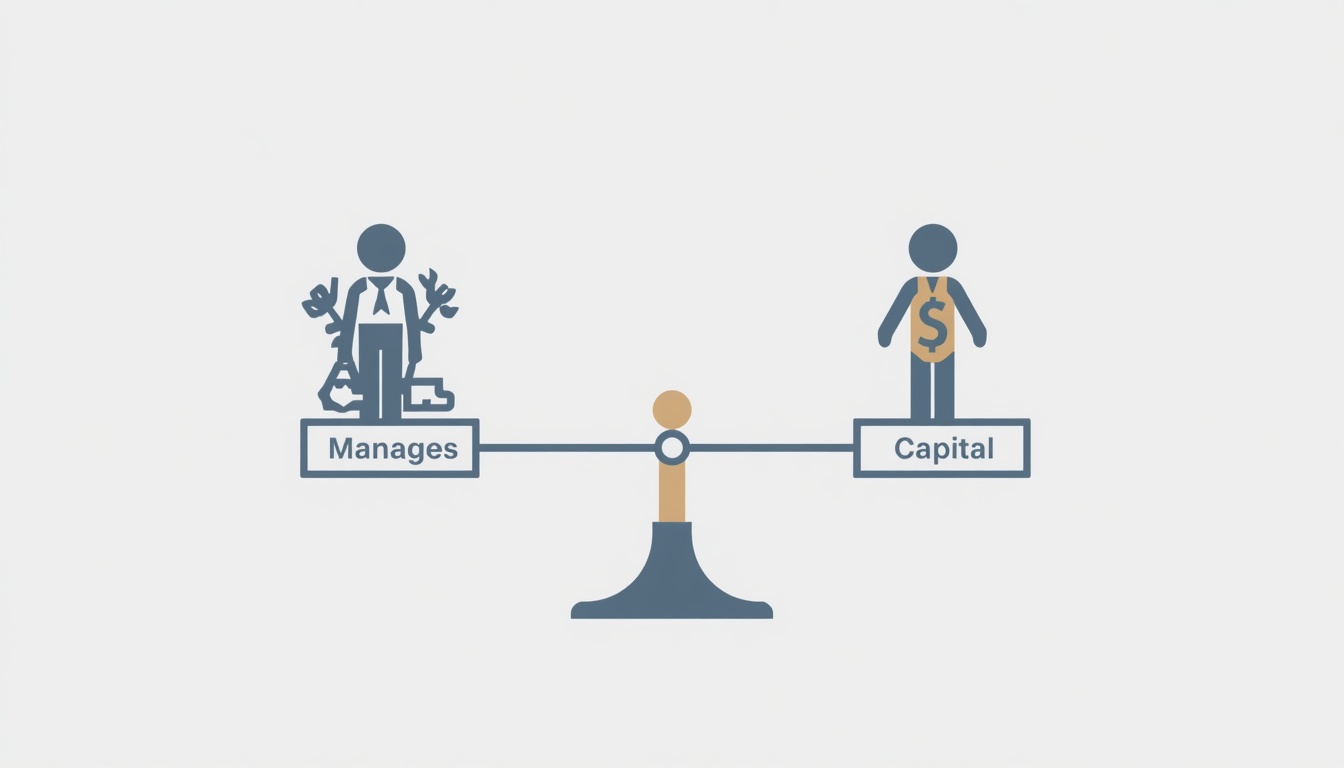
A general partner, or GP, actively manages a real estate investment, making day-to-day decisions and typically carrying more liability, while a limited partner, or LP, contributes capital and participates passively in the investment’s upside without management authority or the same level of personal liability. In most real estate syndications, the sponsor serves as the GP and outside investors participate as LPs.
General Partner vs. Limited Partner in Real Estate Syndications
Anyone who has looked at a real estate syndication offering has run into these two terms without necessarily getting a clean explanation of what they actually mean. Understanding GP vs LP real estate investing roles is foundational, not optional, because the terms define your rights, your risk, and your role before you ever look at a specific deal.
Orivant Capital Partners structures qualifying acquisitions as property-specific real estate syndications, and understanding the GP and LP roles helps investors know exactly what they are agreeing to before committing capital. Learn more about Orivant Capital Partners: https://bit.ly/4cDNMbI
What Is a General Partner
The general partner is the party responsible for actively managing the investment. In a real estate syndication, this role is typically filled by the sponsor, the operating company that sources the deal, underwrites the acquisition, manages renovation, and executes the resale strategy.
General partner responsibilities typically include:
- Identifying and underwriting the property
- Securing financing and structuring the capital stack
- Managing contractors, property managers, brokers, and other project partners
- Making day-to-day operational and strategic decisions throughout the hold period
- Executing the resale or stabilization strategy at the end of the project
Because the GP controls these decisions, they generally carry more direct liability and are typically compensated through a combination of fees, such as acquisition and construction management fees, along with a profit split once investors receive their preferred return.
What Is a Limited Partner
The limited partner is the party contributing capital without taking on management responsibility. In a real estate syndication, outside investors typically participate as LPs, meaning they fund some or all of the equity required for the deal but do not make day-to-day decisions about the property.
Limited partner characteristics typically include:
- Capital contribution without operational control
- Liability generally limited to the amount invested, rather than personal exposure to the property’s broader liabilities
- A defined right to receive distributions according to the terms set out in the operating agreement, often including a preferred return before profit is split with the GP
- No direct involvement in contractor selection, renovation decisions, or resale timing
This structure is what makes passive real estate investment opportunities possible. An LP can participate in a specific property-specific real estate syndication without personally managing contractors, permits, or a resale process.
GP vs. LP: A Side-by-Side Comparison
| Factor | General Partner (GP) | Limited Partner (LP) |
| Role | Actively manages the investment | Contributes capital passively |
| Control | Makes day-to-day operational decisions | No management authority |
| Capital contribution | May include sponsor co-investment alongside fees earned | Primary source of equity capital |
| Liability | Generally greater, tied to management decisions | Generally limited to amount invested |
| Compensation | Fees plus profit split above preferred return | Preferred return plus share of profit split |
| Involvement | Hands-on oversight of contractors, financing, and disposition | Passive, based on periodic reporting |
This table reflects typical structures in real estate syndications, though specific terms always depend on the offering documents for that particular opportunity.
Which One Are You
For most people reading this article, the answer is straightforward. If you are contributing capital to a property-specific real estate syndication without managing the renovation, overseeing contractors, or making resale decisions yourself, you are participating as a limited partner. The sponsor managing those responsibilities is serving as the general partner.
This distinction matters because it clarifies what you should expect from the relationship. As an LP, your primary tools for evaluating and monitoring an investment are the offering documents, the sponsor’s track record, and the ongoing reporting you receive throughout the project, rather than direct involvement in decision-making.
Why This Structure Exists
The GP and LP structure exists because most investors want exposure to real estate without taking on the operational burden of sourcing deals, managing renovations, and executing a resale strategy themselves. At the same time, most sponsors need outside capital to scale beyond what their own resources allow.
Separating management responsibility from capital contribution allows each party to focus on what they do best. The GP brings deal-sourcing expertise, hands-on project oversight, and execution capability. The LP brings capital and, in most structures, the ability to remain entirely passive throughout the hold period.
What to Review Before Participating as an LP
Before investing as a limited partner in any real estate investment opportunity, review:
- The GP’s track record and direct experience executing similar projects
- The specific terms governing your rights as an LP, including preferred return, profit split, and reporting frequency
- Whether the GP is contributing meaningful co-investment capital alongside LP capital
- The fee structure the GP earns, separate from any profit split
How Orivant Capital Partners Structures GP and LP Roles
As a private real estate investment firm, Orivant Capital Partners typically serves as the general partner on qualifying acquisitions across Maryland, Virginia, Delaware, Pennsylvania, Ohio, Kentucky, North Carolina, and West Virginia, with a core focus on the Mid-Atlantic United States and expansion into the Appalachian and Eastern United States region. Our team manages sourcing, renovation, and disposition directly, while investors participate as limited partners in the property-specific real estate syndication formed around each qualifying opportunity.
What Types of Properties We Acquire
Our acquisitions team evaluates properties with clear value-add potential, including single-family and small multifamily properties, larger apartment communities, distressed and underperforming commercial properties, self-storage facilities, and lender-owned, foreclosure, and tax-delinquent properties.
Target Property Acquisition Locations
We evaluate opportunities across Maryland, Virginia, Delaware, Pennsylvania, Ohio, Kentucky, North Carolina, and West Virginia, with a core focus on the Mid-Atlantic United States and expansion into the Appalachian and Eastern United States region.
Frequently Asked Questions
Can an investor be both a GP and an LP in different deals? Yes. Many experienced capital partners serve as an LP in deals sponsored by others while also acting as a GP or co-GP on their own projects, depending on their role in each specific transaction.
Does an LP have any say in how the property is managed? Generally, no. Limited partners typically do not have direct management authority, though the operating agreement may specify certain major decisions that require LP consent or approval.
Is an LP’s liability always limited to their investment amount? In most properly structured LP arrangements, yes, liability is generally limited to the amount invested, though investors should confirm this specifically in the offering documents for any particular deal.
How is a GP typically compensated compared to an LP? A GP is typically compensated through fees, such as acquisition or construction management fees, plus a profit split once LPs receive their preferred return, while an LP receives a preferred return and their share of the remaining profit split.
Related Topics
For more on how returns are structured between the GP and LP, review our explanation of preferred return and the profit-split waterfall. Investors should also review our guide to accredited versus non-accredited investor requirements before evaluating a specific LP opportunity.
Related Resources
- Orivant Capital Partners
- Investment Strategy
- Passive Investment Opportunities
- Frequently Asked Questions
- Additional Information and Case Studies
- Orivant Capital Partners- Property-Specific Real Estate Investments
Next Step
Investors interested in participating as a limited partner in an upcoming opportunity are encouraged to join the investor list. Orivant Capital Partners can be reached at (202) 946-6108 or Info@orivantcapital.com
Investment Risk Disclosure
Investments offered by Orivant Capital Partners are private placements, not registered with the SEC or any state securities regulator, and are available only to qualified prospective investors who meet applicable certain requirements. These investments are illiquid: there is no public market for them, transfers are restricted, and investors should expect to hold their capital for the full multi-year duration of the investment with no right to redeem early. Because private placements are not subject to the disclosure requirements of registered offerings, the information Orivant provides, including projected returns and underwriting assumptions, has not been independently verified, and prospective investors should conduct their own independent due diligence before investing.
Real estate investments, particularly value-add and distressed strategies, carry a materially higher risk profile than many other asset classes. There is no guarantee that any investment will achieve its projected returns, and investors may lose some or all of their invested capital, including as a result of leverage, execution or repositioning delays, and broader market or economic conditions. This summary does not describe every risk of investing with Orivant Capital Partners and is qualified in its entirety by the definitive offering documents for each specific investment, which investors should review with their own legal, tax, and financial advisors before making a decision. For questions about a specific offering, contact us at info@orivantcapital.com or (202) 946-6108, or visit orivantcapital.com.
For more information on private placement investing and investor protection:
- U.S. Securities and Exchange Commission: www.sec.gov
- SEC Investor.gov (accredited investor definition and private placement basics): www.investor.gov
- Financial Industry Regulatory Authority (FINRA): www.finra.org
- North American Securities Administrators Association (NASAA), for state securities regulator contacts: www.nasaa.org
Home | About Us | Opportunities | Insights | Contact Us | Case Studies & More




Pingback: Preferred Return Explained: What It Means When a Sponsor Offers You "First Money Out" | Orivant Capital Partners - Orivant Capital Partners