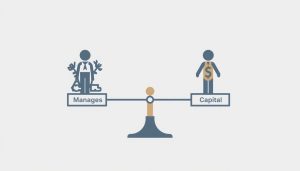

1099 Income vs. W-2 Income: Why the Investment Strategy Should Be Different
1099 earners lack an employer-matched retirement plan, automatic payroll withholding, and the steady income smoothing that W-2 employees rely on, which means their investment strategy needs to account for self-directed retirement funding, more variable cash flow, and often a heavier tax burden. This changes both how much diversification outside traditional retirement accounts makes sense and which investment structures fit best.
Best Investments for High 1099 Income: Why the Playbook Changes
Search for best investments for high 1099 income and most of what comes back is generic advice written for W-2 employees with an employer 401(k) match and predictable biweekly paychecks. That advice does not translate cleanly to physicians on 1099 contracts, partners taking distributions, consultants, or business owners whose income looks nothing like a steady salary.
Orivant Capital Partners works with a meaningful number of investors whose income comes through 1099 contracts, partnership distributions, or business ownership rather than a traditional paycheck. Learn more about Orivant Capital Partners: https://bit.ly/4cDNMbI
The Structural Differences Between 1099 and W-2 Income
Before getting into strategy, it helps to be precise about what actually changes when income shifts from W-2 to 1099 or distribution-based.
W-2 employees typically benefit from:
- Automatic payroll withholding for federal and state taxes
- Employer-sponsored retirement plans, often with a matching contribution
- Predictable, regular paychecks that smooth cash flow throughout the year
- Employer-paid benefits, including health insurance and sometimes disability coverage
1099 earners and business owners, by contrast, generally face:
- No employer match on retirement contributions, since there is no employer providing one
- Quarterly estimated tax payments instead of automatic withholding, with real penalty risk for underpayment
- Variable income that may cluster around certain months or projects rather than arriving in even installments
- Full responsibility for funding their own retirement and benefits structure
These are not minor differences. They fundamentally change how much liquidity to hold, how aggressively to fund tax-advantaged accounts, and how much diversification outside conventional retirement vehicles makes sense.
Why the Lack of an Employer Match Matters More Than People Assume
For a W-2 employee, an employer 401(k) match is effectively free money layered on top of whatever the employee contributes. That structural benefit does not exist for 1099 earners. A self-employed individual funding a Solo 401(k) or SEP IRA is contributing entirely from their own income, without that added employer boost.
This absence changes the calculus. Without an automatic matching incentive pulling capital toward one specific account type, 1099 earners have more flexibility, and arguably more reason, to think carefully about how they allocate capital across retirement accounts, taxable investments, and alternative assets like real estate, rather than defaulting to whatever their employer’s plan happens to offer.
Why Cash Flow Variability Changes the Math
Variable income changes how much of a portfolio should sit in liquid, easily accessible assets versus longer-hold investments. A 1099 earner with lumpy, project-based income generally needs a larger liquidity buffer than a W-2 employee with the same total annual income, simply because the timing of that income is less predictable.
Once that buffer is established, however, 1099 earners often have more flexibility than they realize to allocate additional capital toward less liquid, higher-conviction opportunities, including property-specific real estate syndications, since that capital is not needed for near-term monthly expenses the way it might be for someone relying on a single steady paycheck.
Why Tax Efficiency Matters More for 1099 and Distribution Income
1099 earners and business owners are also generally responsible for both the employee and employer portions of self-employment tax, on top of federal and state income tax, without the payroll withholding cushion a W-2 employee has. This often makes tax-efficient investment structures more valuable on a relative basis, since a larger share of every additional dollar earned is exposed to tax at the margin.
Real estate investments, particularly those held through a property-specific real estate syndication, can offer depreciation-related tax benefits that reduce taxable income from the investment itself. This does not offset self-employment tax on 1099 earnings directly, but it can meaningfully reduce the overall tax drag on investment income for someone already managing a heavier total tax burden.
Building an Investment Strategy Around Variable Income
For 1099 earners and business owners taking distributions, a more deliberate approach to portfolio construction often includes:
- Establishing a larger cash reserve than a comparable W-2 earner might need, sized to smooth over slower income periods
- Maximizing self-directed retirement contributions, such as a Solo 401(k) or SEP IRA, since there is no employer match diluting the benefit of contributing aggressively
- Setting aside quarterly estimated tax payments proactively, rather than treating tax obligations as an annual surprise
- Allocating a portion of capital beyond retirement accounts toward less liquid, tax-efficient opportunities, including real estate, once liquidity needs are covered
- Reassessing risk tolerance and time horizon periodically, since income variability can shift year to year in ways W-2 income typically does not
Why Real Estate Fits This Profile Well
Property-specific real estate syndications can be a reasonable fit for this investor profile for a few specific reasons. They offer a defined, project-based hold period rather than an open-ended commitment, which can align well with an investor’s own irregular cash flow cycle. They also offer depreciation-related tax benefits that specifically help offset taxable income, which matters more to an investor already carrying a heavier marginal tax burden than a comparable W-2 earner.
How Orivant Capital Partners Works With 1099 and Distribution-Based Investors
Orivant Capital Partners structures qualifying acquisitions as property-specific real estate syndications across Maryland, Virginia, Delaware, Pennsylvania, Ohio, Kentucky, North Carolina, and West Virginia, with a core focus on the Mid-Atlantic United States and expansion into the Appalachian and Eastern United States region. Our investor base includes a meaningful number of physicians, attorneys, consultants, and business owners whose income comes through 1099 contracts or partnership distributions rather than a traditional salary, and our team is familiar with the specific planning considerations that come with that income structure.
What Types of Properties We Acquire
Our acquisitions team evaluates properties with clear value-add potential, including single-family and small multifamily properties, larger apartment communities, distressed and underperforming commercial properties, self-storage facilities, and lender-owned, foreclosure, and tax-delinquent properties.
Target Property Acquisition Locations
We evaluate opportunities across Maryland, Virginia, Delaware, Pennsylvania, Ohio, Kentucky, North Carolina, and West Virginia, with a core focus on the Mid-Atlantic United States and expansion into the Appalachian and Eastern United States region.
Frequently Asked Questions
Do 1099 earners have access to the same retirement account options as W-2 employees? Not exactly the same. 1099 earners and business owners typically use a Solo 401(k), SEP IRA, or similar self-employed retirement vehicle rather than an employer-sponsored 401(k), and there is no employer match available in these structures.
Should 1099 earners hold more cash than W-2 employees with similar income? Generally, yes. Variable, project-based income usually calls for a larger liquidity buffer than steady W-2 income, since the timing of future income is less predictable.
Does real estate investing help offset self-employment tax specifically? Not directly. Depreciation-related tax benefits from real estate reduce taxable income from that specific investment, but they do not offset self-employment tax owed on 1099 earnings itself.
Is a property-specific real estate syndication a good fit for someone with irregular income? It can be, once liquidity needs are covered. A defined, project-based hold period can align well with irregular cash flow, though investors should always evaluate a specific opportunity against their own full financial picture.
Related Topics
Investors evaluating tax-efficient structures should also review our explanation of how depreciation reduces taxes on real estate investment income and our guide to using a self-directed IRA for real estate syndication investing. Investors should also confirm eligibility through our guide to accredited versus non-accredited investor requirements.
Related Resources
- Orivant Capital Partners
- Investment Strategy
- Passive Investment Opportunities
- Frequently Asked Questions
- Additional Information and Case Studies
- Orivant Capital Partners- Property-Specific Real Estate Investments
Next Step
1099 earners and business owners interested in exploring a real estate investment opportunity are encouraged to join our investor list. Orivant Capital Partners can be reached at (202) 946-6108 or through our office at 800 Maine Avenue SW, Washington, DC 20024.
Investment Risk Disclosure
Investments offered by Orivant Capital Partners are private placements, not registered with the SEC or any state securities regulator, and are available only to qualified prospective investors who meet applicable certain requirements. These investments are illiquid: there is no public market for them, transfers are restricted, and investors should expect to hold their capital for the full multi-year duration of the investment with no right to redeem early. Because private placements are not subject to the disclosure requirements of registered offerings, the information Orivant provides, including projected returns and underwriting assumptions, has not been independently verified, and prospective investors should conduct their own independent due diligence before investing.
Real estate investments, particularly value-add and distressed strategies, carry a materially higher risk profile than many other asset classes. There is no guarantee that any investment will achieve its projected returns, and investors may lose some or all of their invested capital, including as a result of leverage, execution or repositioning delays, and broader market or economic conditions. This summary does not describe every risk of investing with Orivant Capital Partners and is qualified in its entirety by the definitive offering documents for each specific investment, which investors should review with their own legal, tax, and financial advisors before making a decision. For questions about a specific offering, contact us at info@orivantcapital.com or (202) 946-6108, or visit orivantcapital.com.
For more information on private placement investing and investor protection:
- U.S. Securities and Exchange Commission: www.sec.gov
- SEC Investor.gov (accredited investor definition and private placement basics): www.investor.gov
- Financial Industry Regulatory Authority (FINRA): www.finra.org
- North American Securities Administrators Association (NASAA), for state securities regulator contacts: www.nasaa.org
Home | About Us | Opportunities | Insights | Contact Us | Case Studies & More